








Description
-
Overview of the RTR RC Car Platform
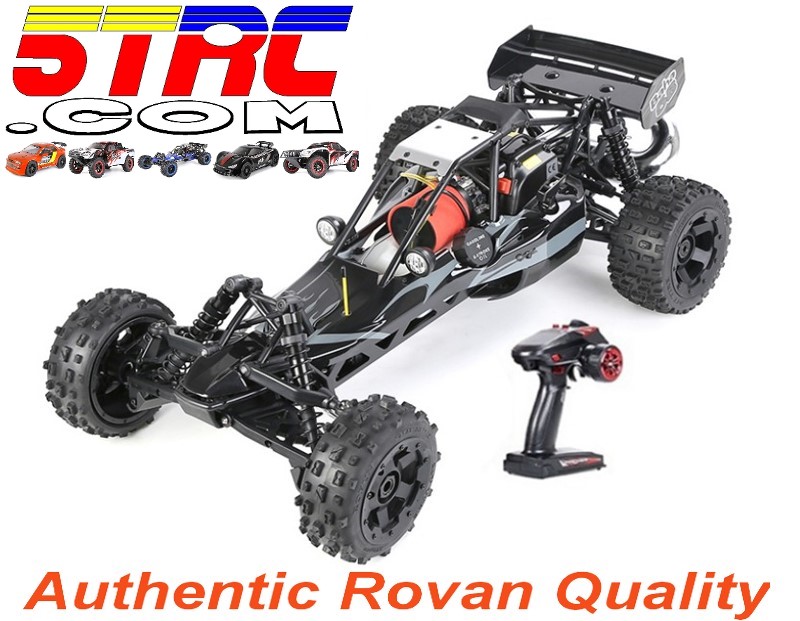
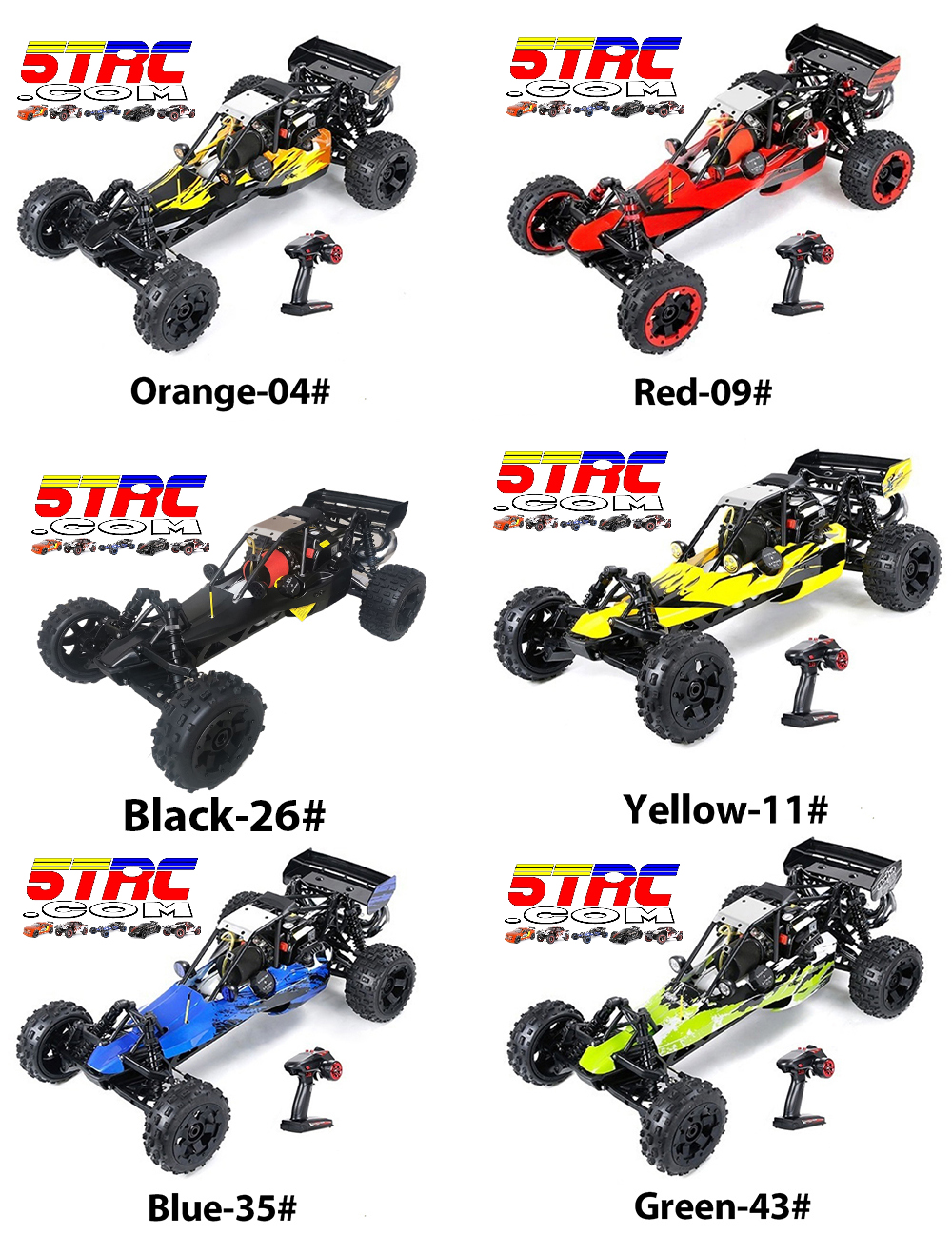
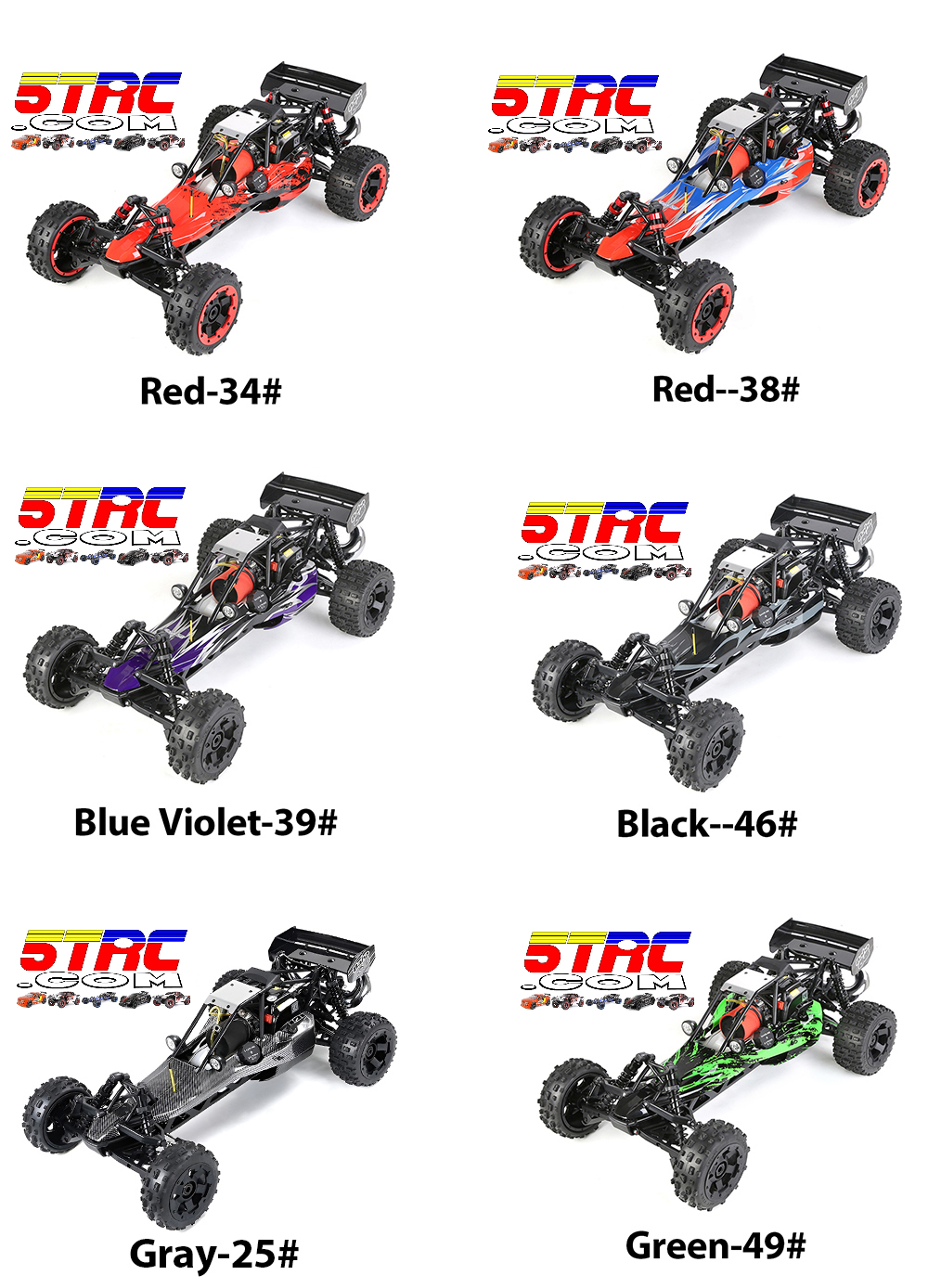
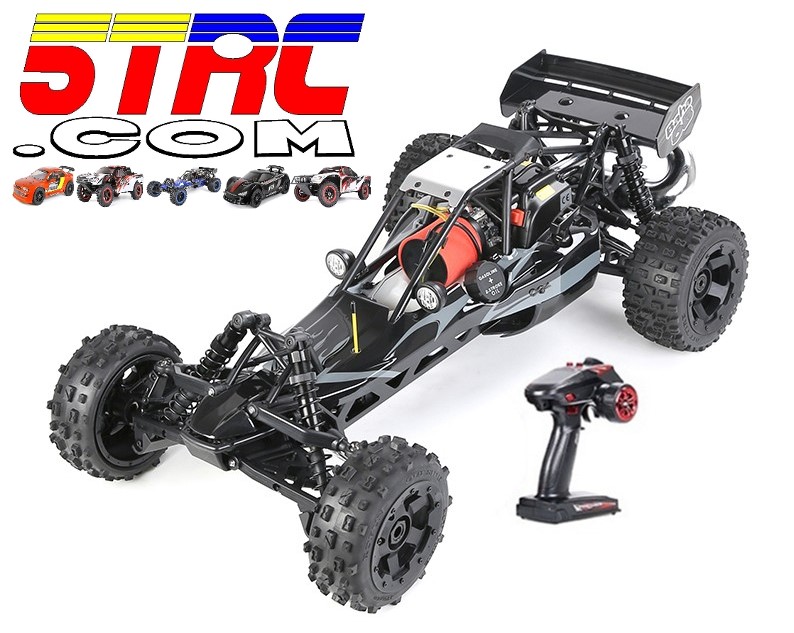
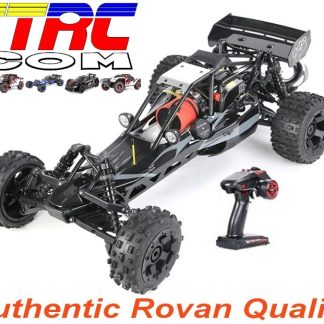
The RTR RC Car Rovan 5B Black #46 is a true 1/5 scale gasoline-powered off-road buggy designed for drivers who want size, power, and durability in a ready-to-run package. As a result, this model combines proven Rovan engineering with heavy-duty components that deliver consistent performance. In addition, the platform produces strong torque, realistic sound, and stable handling across dirt, gravel, and open terrain. Because the RTR RC Car arrives nearly ready to run, users can focus on driving and tuning rather than complex assembly.
Size, Scale, and Chassis Design for the RTR RC Car
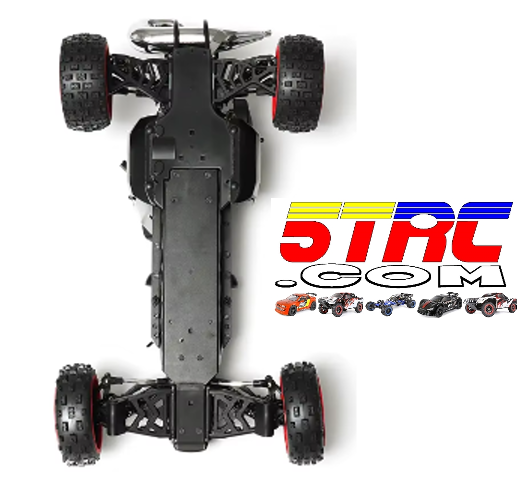
Built to a true 1/5 scale, this large-scale buggy offers excellent stability and visual presence. For this reason, the body dimensions of approximately 32.17 inches long, 18.90 inches wide, and 10.04 inches high help keep the chassis planted during acceleration and cornering. Moreover, the 22.44 inch wheelbase supports balanced weight distribution. At the same time, the wide track width of 15.55 inches in front and 15.75 inches in the rear improves control on uneven terrain.
Suspension and Wheel System for the 1/5 Scale Gas Buggy
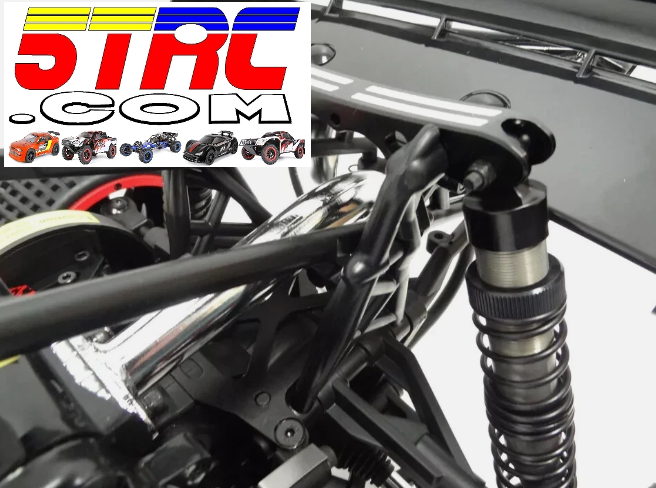
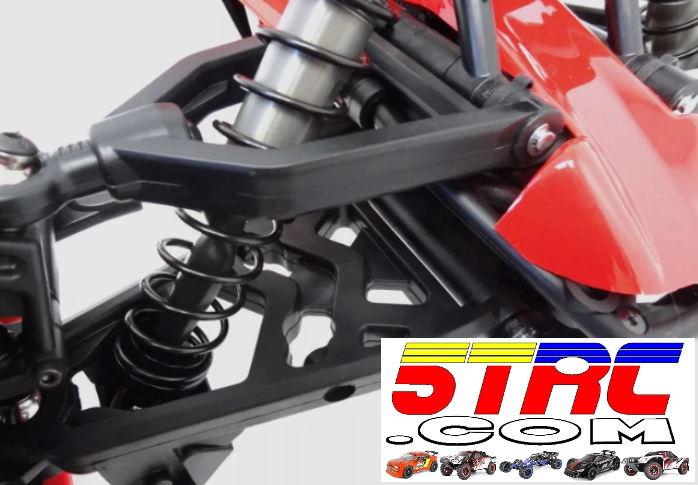
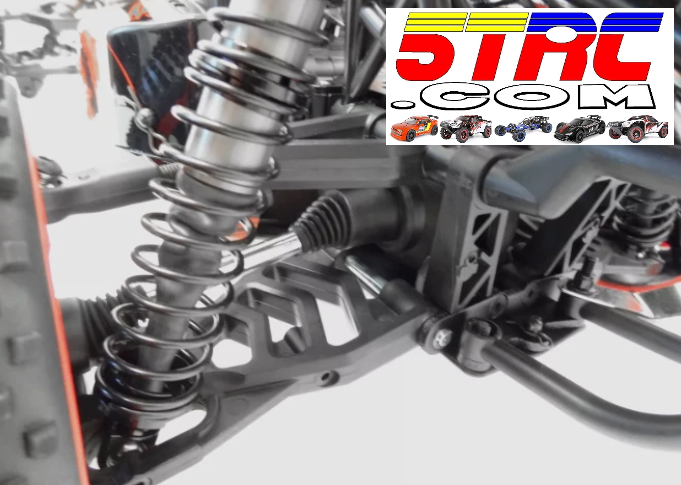
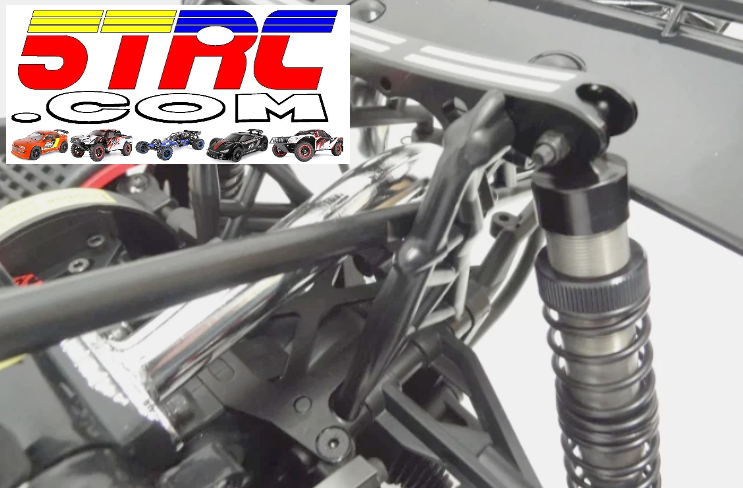
The chassis uses second-generation reinforced front and rear suspensions paired with durable plastic shock absorbers offering 0.24 inches of travel. As a result, the suspension absorbs bumps while maintaining predictable handling. In addition, second-generation wasteland tires mounted on updated wheels improve traction and durability. Consequently, this setup supports confident off-road driving during aggressive use.
Engine and Drivetrain Performance of the RTR RC Car
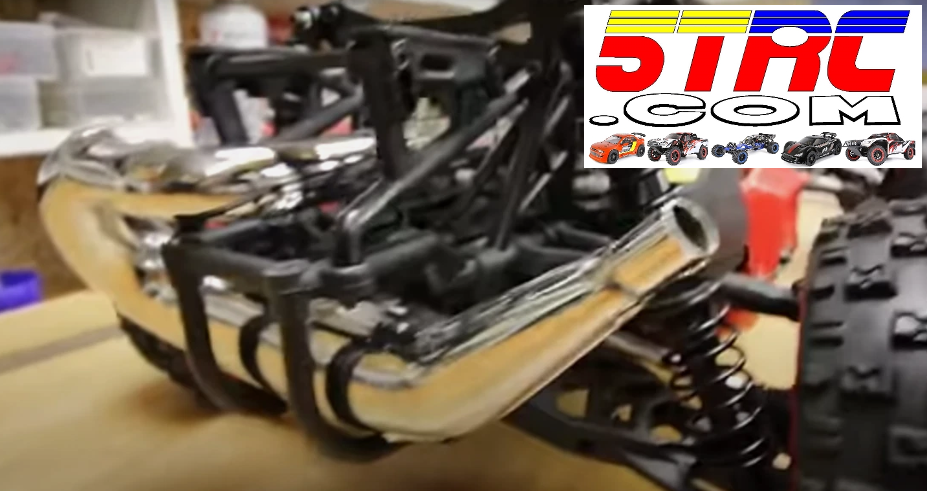
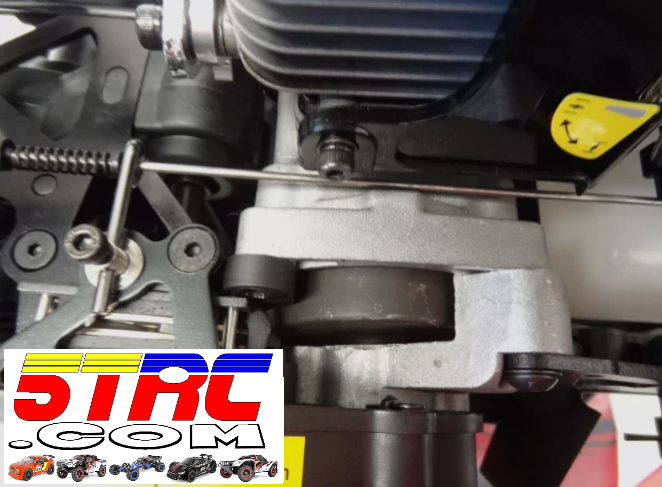
A 29cc single-cylinder, air-cooled gasoline two-stroke engine provides power through a four-point fixed mounting design. Because of this layout, the engine delivers strong low-end torque and responsive throttle control. In stock configuration, the buggy exceeds 40 MPH, which adds to its performance appeal. Furthermore, the Dominator exhaust pipe enhances both sound output and power delivery.
Clutch, Differential, and Rear-Wheel Drive Layout
The drivetrain uses an 8000 rpm clutch and a rear-wheel-drive configuration that delivers classic Baja-style handling. As a result, power transfers efficiently to the ground. Additionally, the metal differential and rear axle brake improve control during acceleration and braking. Therefore, this drivetrain supports durability during extended run sessions.
Electronics and Radio Control for the RTR RC Car
The electronics package emphasizes strength, precision, and reliability. Because of this focus, drivers maintain confident control under demanding conditions. Moreover, high-torque servos and a capable radio system deliver consistent response without unnecessary complexity.
Steering and Throttle Servo System
This RTR RC Car includes a 15KG full metal gear throttle servo and a powerful 60KG metal gear steering servo. As a result, steering authority remains strong even under heavy load. In addition, these servos resist wear during high-stress operation.
2.4G Radio Control System
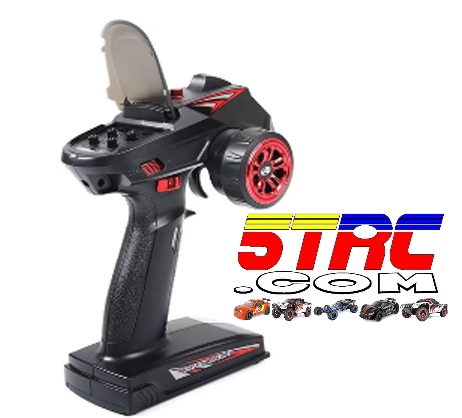
The included non-LCD 2.4G six-channel RC-X6 remote control primarily uses two channels. At the same time, the remaining channels allow future expansion if desired. Furthermore, trim adjustments under the rear cover allow precise tuning. As a result, drivers can fine-tune steering and throttle response easily.
Battery and Power System for the Ready-to-Run Buggy
A 6V SC2000 mAh battery supplies extended run time for onboard electronics. Because the battery charges quickly and requires minimal maintenance, downtime between runs stays minimal. Therefore, drivers spend more time operating the vehicle.
Assembly and Operation for the RTR RC Car
Out of the Box: Ready to race once the wheels are installed and the car battery has been charged. Minimum 2 hours charge recommended.
Battery Charging
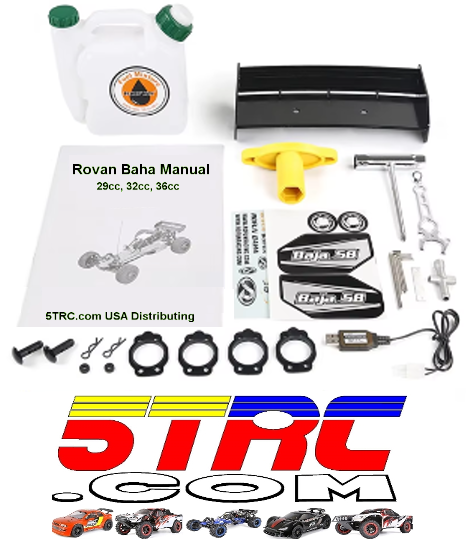
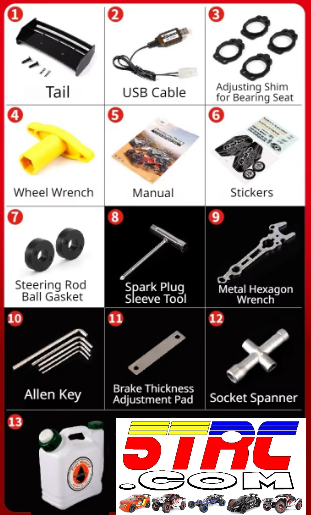
The car features a charging plug and includes a USB charger. As a result, charging requires no disassembly. Additionally, allowing the battery to cool for 30 minutes after a full charge helps extend battery life. Therefore, removing the charger within 30 minutes of the green light remains recommended. Store the battery fully charged.
Crash Durability
Minor crashes are unlikely to cause significant damage. Because these cars use durable materials, they tolerate off-road impacts well.
Fuel Mixing for the 1/5 Scale Gas Buggy
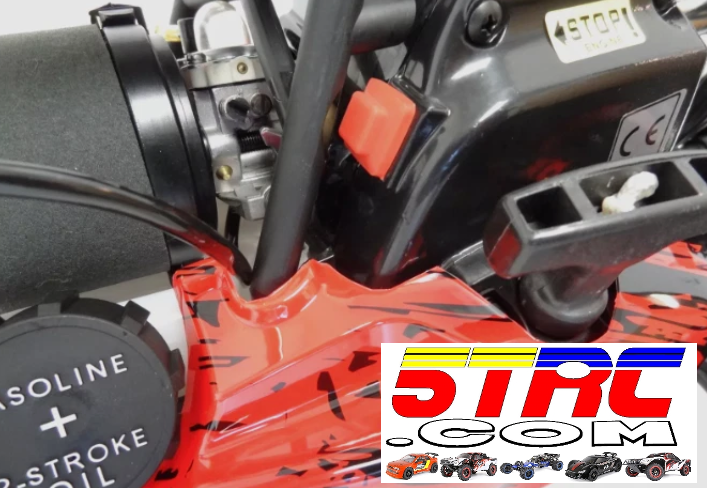
This vehicle uses a 25:1 gasoline-to-oil ratio (151.4 ml per gallon). First, fill the oil compartment of the mixing jug to the 25:1 line. Then, fill the gasoline compartment to the same line. As a result, the engine receives proper lubrication. Use non-synthetic, mineral-based 2-cycle oil. In addition, quality oil reduces carbon buildup and helps prevent plug fouling.
Radio Setup and Adjustments
This 6-channel radio primarily uses 2 channels with this car. However, trim adjustments allow fine control. For example, the top left dial adjusts steering trim, while the top right dial adjusts throttle and brake trim. Meanwhile, the lower dials control steering and throttle extents.
Starting Instructions for the RTR RC Car
Ensure the car and radio are powered on and responding.
Set the choke on the right side of the car (red lever on the carburetor) to the vertical closed position.
Press the primer bulb on top of the carburetor 3 to 4 times, or once fuel is visible.
Gently pull the starter rope until it engages, then pull swiftly. Do not pull the rope out completely; use short quick pulls.
Crank until the engine fires (usually 1 to 3 pulls).
Turn off the choke, then pull the rope 1 or 2 times to start the engine.
Never crank more than 3 times with the choke on.Break-In Process for the 1/5 Scale Gas Buggy
Initial Run: Start by running the car at idle to 1/4 throttle or less for about 5 minutes. Afterward, let the engine cool down completely.
Second Run: Repeat the same process for 10 minutes. Then, allow the engine to cool again.
Third Run: You can start pushing it a little harder. However, keep in mind that a new engine generates more heat. Run for 8 to 10 minutes, then let it cool.
Subsequent Runs: Continue the process for about five runs. Meanwhile, ensure debris does not block cooling. As a result, the engine maintains lower operating temperatures.
Final Break-In: After these runs, you can run the car at full throttle and let it burn through an entire tank of fuel.
Post-Break-In: Be sure to check and snug up the exhaust pipe after the initial break-in process.
Before each run, check bolts throughout the car to ensure they are tight. In addition, lock-tight is recommended on clutch and brake assembly bolts. Therefore, clean bolts and holes with alcohol before applying lock-tight.
You will be tempted to upgrade some parts to aluminum. However, aluminum transfers impact energy and can damage surrounding components. Instead, high-strength ABS plastic flexes and rebounds, which often results in better durability.
Disclaimer and Safety Notice
All items offered by 5TRC are brand new. However, if you are new to the hobby, instructional videos are strongly recommended. Rofun and Rovan products sold by 5TRC are sold without warranty, express or implied. Because these vehicles are often modified, all products are sold without guarantees. Furthermore, exhaust components can cause severe burns if handled improperly. As a result, improper use may cause serious injury or death. By purchasing this product, you agree to hold harmless 5TRC from all liability related to use or misuse.
5TRC.com, USA’s #1 Rovan Distributor


Reviews
There are no reviews yet.